If you've been following the Waves blockchainis a decentralized cryptocurrency platform focused on creating financial applications without intermediaries ecosystem lately, you’ve likely stumbled upon Puzzle Swap. But here is the reality check before you connect your wallet: this isn’t another generic trading platform promising to replace centralized giants. It is a specialized tool built for one thing only-optimizing trades specifically within the Waves DeFirefers to decentralized finance applications running on the Waves network environment.
We are living in early 2026, and the landscape of crypto exchanges has changed. You have massive centralizers, but also dozens of niche aggregators. Puzzle Swap positions itself as a next-generation Automated Market Maker (AMMstands for Automated Market Maker, a system that uses algorithms instead of traditional order books) exchange. It doesn't try to compete with everyone everywhere. Instead, it focuses deep within the Waves pool. Let's break down exactly how it works, what risks come with a platform that has "untracked" volume status, and whether it actually saves you money compared to swapping manually.
How Puzzle Swap Actually Works
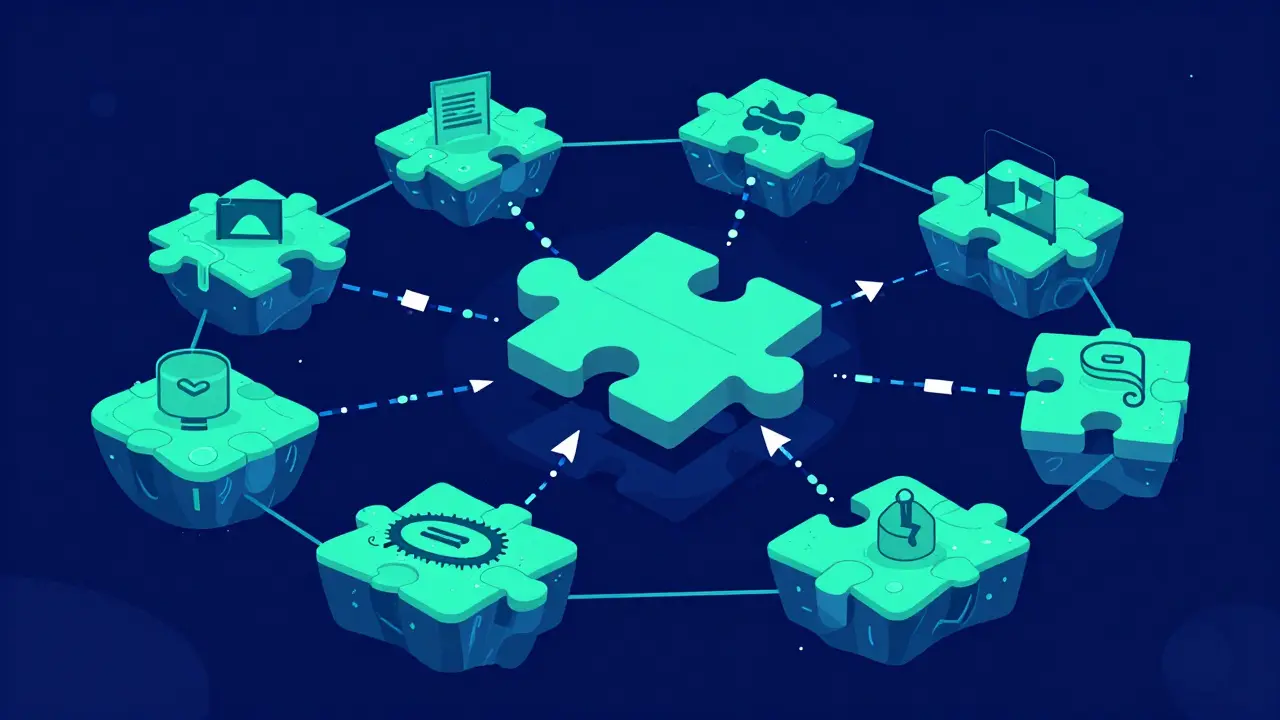
The core magic here isn't just matching buyers and sellers; it’s using smart routing. Most decentralized exchanges require you to pick the right liquidity pool yourself. If you pick a dry pool, you get terrible rates. Puzzle Swap acts as an engine that scans multiple sources simultaneously. Think of it like using Skyscanner for flights, but for crypto assets on the Waves network.
The system runs something called the Puzzle Aggregatora proprietary algorithm that searches for the best trading prices across connected platforms. This tool looks at three main things when you enter a trade:
- Internal Liquidity: The pools managed directly by the platform itself.
- External Integrations: Specifically connecting with Swop.fi and Waves.Exchange.
- Asset Compatibility: Only handling tokens native to the Waves chain.
This matters because fragmentation kills profitability. Without an aggregator, if you want to swap a token available on two different places, you have to check both prices manually, execute two transactions, and pay fees twice. This tool handles the legwork so you don't lose time or value during the swap.
The Native Token Economy
No modern platform exists without its own utility coin, and Puzzle Swap is no exception. They issue the PUZZLE Tokenthe native governance and fee utility token of the exchange. When analyzing any new project, the tokenomics tell you how sustainable the model is. Here is the breakdown of what we know so far:
- Total Supply Cap: Capped at 471,270 tokens. This low cap suggests it isn't trying to distribute wealth widely like some meme coins.
- Circulating Supply: Matches the max cap exactly, meaning all tokens are currently in circulation.
- Utility: Primarily used for governance decisions and managing fee structures.
This scarcity model implies that the token is meant to hold value for stakeholders rather than be dumped quickly. However, with untracked market volume data, there is significant volatility risk. Prices can swing wildly when demand changes slightly. Before you stake these tokens, understand that their liquidity is significantly lower than major assets like Bitcoin or ETH.
Liquidity Aggregation vs. Direct Trading
You might ask why you shouldn't just go to Waves.Exchange directly. The answer lies in slippage. Slippage happens when the price moves between the time you hit send and the transaction settles. If you trade large amounts on a single small pool, you move the price against yourself.
Puzzle Swap breaks your large order into smaller pieces across different underlying pools. For example, if you are moving a large amount of WAVES into a stablecoin, the aggregator might split the order across three different venues to find the weighted average price. This reduces the cost of the trade. It effectively maximizes your execution price compared to clicking through each venue individually.
| Feature | Puzzle Swap | Direct Waves.Exchange | 1inch (General) |
|---|---|---|---|
| Ecosystem Focus | Waves Only | Waves Only | Multichain (10+ chains) |
| Best For | Waves-heavy portfolios | Basic swaps | Cross-chain arbitrage |
| Liquidity Source | Aggregated (Swop, Own, Ex) | Single Source | Multi-Protocol Aggregator |
| User Interface | Web-Based App | Web-Based App | Web/App |

Who Should Actually Use This?
Honestly, if your entire portfolio sits on Ethereum, Polygon, or Solana, Puzzle Swap won't help you. It requires you to already be invested in the Waves Networkis a Swiss-based public permissionless blockchain protocol. It functions best for active traders holding assets exclusively within this specific vertical.
If you are holding niche altcoins or stablecoins within the Waves ecosystem, this tool gives you access to more liquidity than a standard single-pool exchange. It removes the friction of finding which specific app holds the most liquid version of a specific asset. For casual holders, the benefits might be negligible, but for high-frequency movers, the savings on fees add up quickly.
Tax Reporting and Regulatory Visibility
This is often overlooked, but regulators care about where your trades happen. Even though it is a Decentralized Exchange (DEX), tax agencies can track these transactions. The transparency of the blockchain ledger means every signature you sign creates a permanent record.
Users need to keep detailed records of:
- Entry and Exit Points: Know the exact value in fiat currency at the moment of swap.
- Fees Paid: These reduce your cost basis.
- Gas Costs: Transaction fees on Waves must be reported separately in many jurisdictions.
There is no "privacy shield" here. While KYC isn't always required to open a wallet, tax authorities look at on-chain behavior. Make sure you export your transaction history regularly from the dashboard.
Security and Risks
Every non-custodial exchange carries specific risks. Since you control the keys, the platform cannot steal your funds directly from a bank account. However, smart contract vulnerabilities remain a concern. Unlike centralized banks with insurance funds, DeFi protocols rely on code integrity.
Currently, public documentation on comprehensive third-party security audits is sparse for this specific aggregator. This is common for specialized tools that focus heavily on development rather than public relations. To manage this risk, always interact with familiar assets first. Check if the contracts are verified on the block explorer before sending large sums. Trust, but verify the code.
Performance and User Experience
Navigating the platform is straightforward. The interface mimics standard DEX layouts found on Ethereum projects. You select the token, enter the amount, and the system finds the route. There aren't hidden menus or complex settings buried away.
However, community feedback remains scarce. Because it targets a specific vertical rather than the general mass market, you won't find thousands of Reddit threads reviewing it. This lack of social proof can make initial adoption scary. Stick to testnet environments if they are available, or start with minimal capital until you feel comfortable with the execution speed.
Is Puzzle Swap safe to use?
It utilizes non-custodial architecture, meaning you control the private keys via your own wallet connection. However, smart contract risks still exist, and fewer audits are publicly available compared to top-tier platforms.
Does it support Ethereum tokens?
No, the platform is strictly limited to assets within the Waves blockchain ecosystem. You cannot bridge assets directly from Ethereum to trade here without wrapping them first.
What is the purpose of the PUZZLE token?
The token governs the protocol parameters and helps manage fee structures within the ecosystem. It does not necessarily provide passive income dividends in the traditional sense.
Can I avoid paying taxes on my trades here?
No, tax agencies can track on-chain transactions. Users are responsible for reporting gains, losses, and fees incurred during the swaps.
How do I get started?
You need a compatible wallet that supports the Waves network. Connect it to the web interface at puzzleswap.org/trade, approve the necessary permissions, and you can trade immediately.


